Exclusive: Nearly Half of Excluded US Healthcare Providers Concentrated in Just Five States, Reveals New Study
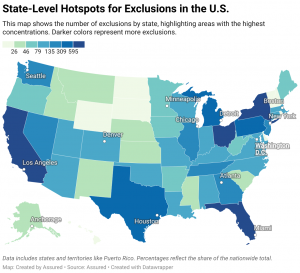
A startling new report has uncovered that 45% of excluded healthcare providers in the United States are clustered in just five states, raising significant compliance risks for employers and insurers relying on outdated screening methods.
The research, conducted by global verification leader Verifirst, highlights a critical gap in workforce monitoring, with California, Florida, Texas, New York, and Pennsylvania accounting for nearly half of all sanctioned medical professionals barred from federal healthcare programmes.
A Growing Compliance Blind Spot
Excluded providers—individuals prohibited from participating in Medicare, Medicaid, and other federal healthcare initiatives due to fraud, malpractice, or criminal activity—pose a severe compliance threat. Hiring or engaging such professionals can result in hefty fines, legal penalties, and reputational damage.
Despite this, many organisations still rely on manual verification processes or infrequent database checks, leaving them vulnerable to oversight.
“Excluded providers are a hidden liability for any organisation that bills federal or state healthcare programmes,” said Verifirst CEO Brian Strom. “With nearly half concentrated in five states, employers in these regions face heightened risks if they aren’t continuously monitoring their workforce.”
The Technology Gap in Compliance
The report underscores the limitations of traditional screening methods, which often fail to detect exclusions in real time. Manual checks against the Office of Inspector General’s (OIG) Exclusion List or System for Award Management (SAM) can be time-consuming and prone to human error.
Strom warns that relying on outdated systems is no longer viable. “Organisations need automated, ongoing monitoring to stay compliant. The speed at which exclusions can occur—sometimes daily—makes legacy processes insufficient.”
Key Recommendations for Employers
To mitigate risks, Verifirst advises healthcare organisations and staffing agencies to:
-
Implement continuous monitoring solutions that flag exclusions in real time.
-
Expand screening beyond the OIG list to include state-level exclusion databases.
-
Integrate compliance checks into existing HR and payroll systems for seamless oversight.
The Bottom Line
With regulatory scrutiny intensifying, the consequences of non-compliance have never been steeper. Fines can exceed $20,000 per violation, not to mention potential legal action and loss of funding.
As Strom notes, “Proactive exclusion screening isn’t just about avoiding penalties—it’s about protecting patients and maintaining trust in the healthcare system.”
For more insights on automated compliance solutions, visit Verifirst’s official website.