SpaceX Redefines Markets as Its Historic IPO Fuels the Space Race and Artificial Intelligence
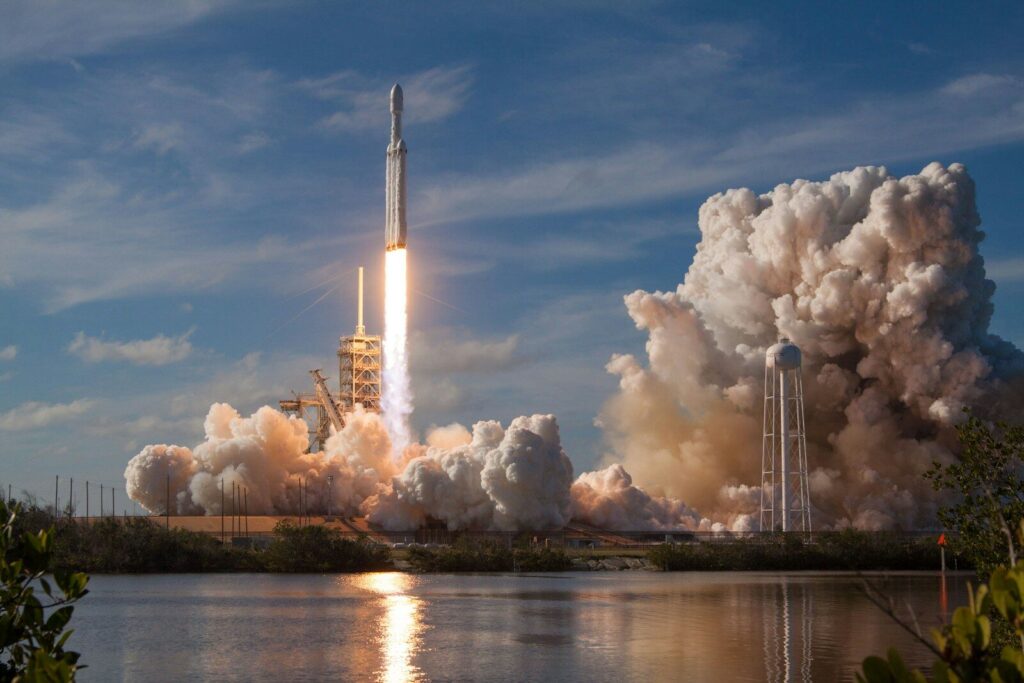
SpaceX is on the verge of becoming the centrepiece of one of the most significant financial events in modern history. The company founded by Elon Musk has announced plans to launch an Initial Public Offering (IPO) to raise $75 billion, a transaction that would value the company between $1.75 trillion and $1.77 trillion. If completed, it would become the largest IPO ever, comfortably surpassing Saudi Aramco’s record and positioning SpaceX among the most valuable companies on the planet.
The scale of the offering has generated an extraordinary response from financial markets. Preliminary demand from institutional investors is estimated at approximately $150 billion, double the amount the company intends to raise. This level of interest reflects not only confidence in SpaceX’s business model but also growing investor appetite for companies linked to strategic sectors such as artificial intelligence, telecommunications, and space exploration.
One of the most striking aspects of the offering is the decision to reserve up to 30% of the shares for retail investors. This approach is uncommon in transactions of this magnitude and aims to broaden public participation in a company that has remained outside traditional stock markets for years. The move could also help generate strong demand during the first trading sessions.
SpaceX’s leadership in the aerospace industry has been a primary driver of its valuation. The company currently dominates the global commercial launch market and maintains a significant competitive advantage through rocket reusability, an innovation that has substantially reduced the cost of accessing space. In addition, it continues to expand its presence through government contracts and strategically important international missions.
Another fundamental pillar supporting the valuation is Starlink, the satellite internet division that already operates one of the largest constellations in the world. The service continues to expand into new markets and regions with limited telecommunications infrastructure, generating recurring revenue and establishing itself as a key growth engine for the company. Analysts believe Starlink could become one of the most profitable businesses within the SpaceX ecosystem over the next decade.
However, investor enthusiasm extends beyond the space business itself. The growing integration between SpaceX, xAI, and the social media platform X has fuelled expectations surrounding the development of a new global artificial intelligence infrastructure. The possibility of combining satellite connectivity, data processing, and advanced AI capabilities has created a growth narrative that extends far beyond the traditional aerospace industry and places the company closer to the world of major technology giants.
Expectations have also revived speculation about a potential integration between Tesla and SpaceX. Some investors see significant synergies between the two companies, particularly in artificial intelligence, robotics, autonomous vehicles, and large-scale data processing. Nevertheless, regulatory, corporate, and governance challenges remain substantial, making any move in that direction unlikely in the near term.
From a financial perspective, SpaceX continues to demonstrate strong expansion capabilities. In 2025, the company reported revenue of $18.67 billion, up 33% from the prior year. Although it posted net losses of approximately $4.94 billion, these were largely due to massive investments in new technologies, satellite infrastructure, space programmes, and artificial intelligence-related projects.
Markets are also closely watching the wealth implications for Elon Musk. With a nearly 50% stake in the company and more than 82% of voting power following the offering, the entrepreneur would retain virtually complete control over SpaceX’s strategic direction. Based on the projected valuation, his ownership stake would be worth approximately $841 billion, an unprecedented figure in modern corporate history.
In conclusion, SpaceX’s potential IPO represents far more than a record-breaking financial transaction. It symbolises the convergence of space exploration, global connectivity, and artificial intelligence, three of the sectors with the greatest growth potential over the coming decades. If the company meets the expectations currently priced in by the market, it could redefine not only the aerospace industry but also the future of global technology, further solidifying Elon Musk’s position as one of the most influential figures in the modern economy.