MTN Nigeria and First WATT Partner on Major Renewable Energy Rollout to Support Digital Infrastructure and EV Charging
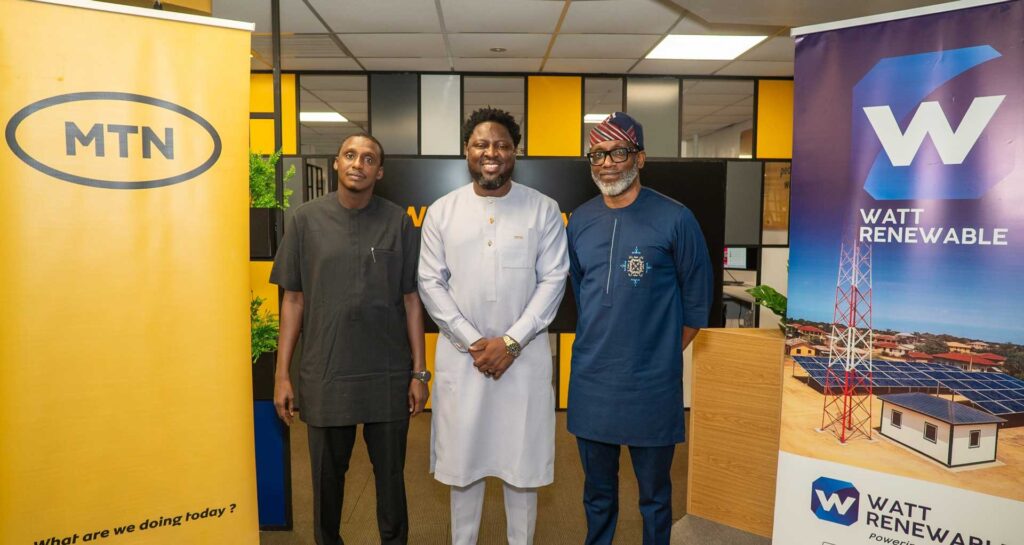
One of Africa’s largest telecommunications operators has unveiled a major renewable energy partnership aimed at strengthening critical digital infrastructure while supporting the growth of electric vehicle charging networks in Nigeria.
MTN Nigeria has joined forces with First WATT Renewable Limited to deploy large-scale solar and battery energy systems across key operational sites nationwide, reducing reliance on diesel-powered generation and improving energy resilience.
The initiative forms part of a wider effort to modernise energy infrastructure supporting Nigeria’s rapidly expanding digital economy, where reliable power remains essential for telecommunications, data services and connectivity.
Under the agreement, approximately 34 megawatts peak (MWp) of solar photovoltaic generation capacity and 40 megawatt-hours (MWh) of battery energy storage will be installed across selected MTN facilities. These include data centres, switching facilities, cable landing stations, customer service centres and other critical network locations.
In addition to supporting telecommunications infrastructure, the programme will also provide renewable energy systems for electric vehicle charging facilities at eight MTN sites located in Lagos, Abuja, Port Harcourt, Asaba, Kano and Ibadan.
The EV charging infrastructure will consist of 60kW charging stations powered by renewable energy, helping to address one of the key challenges facing electric vehicle adoption across Africa – access to reliable and sustainable power.
Industry analysts increasingly view renewable energy investment as a strategic necessity for African businesses, particularly in markets where grid reliability remains a challenge and diesel generation continues to account for a significant share of operational energy consumption.
The project is expected to improve operational uptime, strengthen business continuity and reduce emissions associated with MTN Nigeria’s operations.
Based on current forecasts, the programme could help avoid an estimated 25,000 tonnes of carbon dioxide equivalent emissions over the next five years, subject to final operational performance and emissions calculations.
Oluwole Eweje, Chief Executive Officer of WATT Renewable Corporation, described the partnership as a significant milestone for both organisations and for Nigeria’s wider energy transition.
“This partnership is a defining milestone for First WATT and an important step in strengthening the energy infrastructure that supports Nigeria’s digital economy. By deploying solar photovoltaic generation and battery energy storage across selected MTN facilities, we are helping to improve energy reliability at critical locations where uptime is essential.
“The EV charging component also demonstrates how renewable energy infrastructure can support Nigeria’s transition to lower-carbon mobility. By providing renewable power systems for EV charging sites, this programme helps address one of the key requirements for wider EV adoption: reliable and cleaner energy supply.”
For MTN Nigeria, the investment aligns with broader sustainability objectives while supporting the resilience of the company’s extensive telecommunications network, which serves more than 89 million customers.
Tobechukwu Okigbo, Chief Corporate Services and Sustainability Officer at MTN Nigeria, said the programme supports the company’s long-term environmental strategy.
“As Nigeria’s energy and mobility landscape evolves, renewable energy will play an important role in building cleaner and more reliable infrastructure. This partnership supports our efforts to reduce diesel dependence, improve operational efficiency, and strengthen the resilience of the systems that power connectivity.
“It is also aligned with Project Zero, under our Doing for Planet sustainability pillar, through which we are focused on reducing greenhouse gas emissions, improving energy efficiency, and increasing the use of renewable energy across our operations.”
The agreement highlights a growing trend across Africa, where major corporations are increasingly investing in renewable energy solutions not only to meet sustainability targets but also to improve operational reliability, manage energy costs and support long-term economic growth.
As digital connectivity, data consumption and electric mobility continue to expand across the continent, partnerships between technology providers and renewable energy specialists are expected to play an increasingly important role in supporting Africa’s next phase of development.