Global AI Infrastructure Race Intensifies as New Data Centre Powerhouses Challenge Traditional Tech Hubs
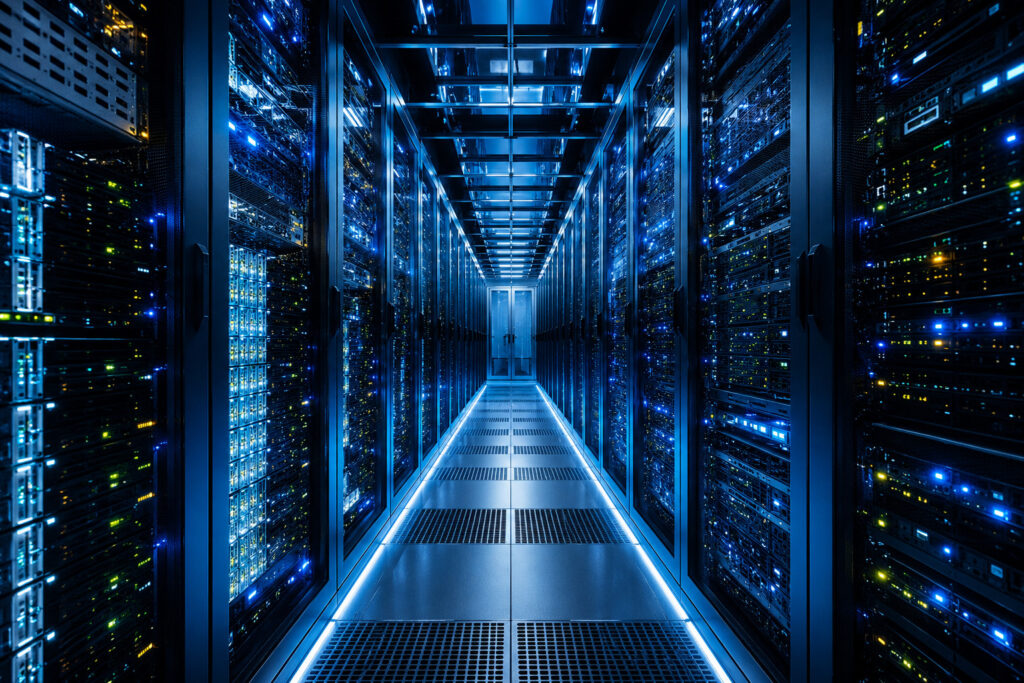
The global competition to become the home of artificial intelligence infrastructure is accelerating, with countries around the world battling to secure investment in the next generation of data centres.
According to DC Byte’s latest 2026 Global Data Centre Index, the market is entering a new era where access to electricity, government policy and infrastructure delivery are becoming more important than location alone. As AI adoption accelerates across every major economy, the ability to build data centres quickly has become a strategic advantage.
AI is Driving an Infrastructure Revolution
The explosion in generative AI, cloud computing and high-performance computing is fuelling unprecedented demand for data centre capacity.
Technology giants continue investing billions in AI infrastructure, but the report warns that demand is no longer the industry’s biggest challenge. Instead, developers are increasingly constrained by power availability, planning delays and complex regulatory environments.
Rather than asking where customers are located, operators are now asking where they can actually secure sufficient electricity to build new facilities.
The Global Map is Changing
While established data centre markets remain important, growth is increasingly spreading to new international locations capable of supporting rapid expansion.
The report suggests that markets with reliable electricity networks, available land and predictable planning systems are attracting growing attention from investors looking to deploy capital efficiently.
This shift is creating opportunities for emerging digital infrastructure hubs across Asia-Pacific, the Middle East, Europe and parts of the Americas, helping to diversify global AI capacity rather than concentrating it within a handful of traditional markets.
Power is Becoming the New Currency
Electricity has emerged as the defining resource of the AI economy.
Data centres supporting advanced AI workloads consume enormous amounts of energy, making access to resilient power infrastructure one of the biggest factors influencing investment decisions.
DC Byte’s analysis shows that markets with stable grid capacity and clear energy strategies are consistently outperforming locations where developers face lengthy connection queues or uncertain infrastructure upgrades.
For governments hoping to attract technology investment, strengthening energy infrastructure may now be just as important as offering financial incentives.
Billions Are Being Committed Earlier
Investor confidence in long-term AI growth remains exceptionally strong.
The report notes that developers and institutional investors are increasingly committing capital well before construction begins, often acquiring land and negotiating power agreements years ahead of project delivery.
While this reflects confidence in future demand, it also increases exposure to planning delays, permitting challenges and energy constraints that could affect project timelines.
Governments Hold the Keys
National governments are playing an increasingly influential role in determining where digital infrastructure is built.
Planning policy, environmental regulation, grid investment and industrial strategy now have a direct impact on global competitiveness.
Countries able to streamline approvals while maintaining environmental standards are likely to attract greater levels of international investment as AI infrastructure spending continues to accelerate.
Execution Matters More Than Announcements
One of the report’s strongest messages is that headline project announcements do not always translate into operational capacity.
Although the global development pipeline continues to grow rapidly, many announced facilities remain delayed because of electricity shortages, permitting issues or financing challenges.
For technology companies dependent on AI computing power, certainty of delivery is becoming just as valuable as the size of the planned investment.
A Multi-Trillion-Dollar Opportunity
Industry forecasts suggest the current investment cycle has only just begun.
Independent research from JLL estimates that almost 100 gigawatts of additional global data centre capacity could be added between 2026 and 2030, effectively doubling worldwide capacity as AI adoption expands across every major industry.
For countries competing to become global technology leaders, the challenge is no longer attracting AI companies—it is providing the energy, infrastructure and regulatory certainty needed to support them.
As artificial intelligence reshapes economies around the world, the winners in the global data centre race are likely to be those that can deliver reliable infrastructure at scale rather than simply announce ambitious plans.
Sources
- DC Byte – 2026 Data Centre Outlook: https://www.dcbyte.com/news-blogs/2026-data-centre-outlook-top-five-trends/
- DC Byte – Global Data Centre Index: https://www.dcbyte.com/global-data-centre-index/
- DC Byte – Global Data Centre Index Report 2026: https://www.dcbyte.com/global-data-centre-index/2026-global-data-centre-index-report/
- JLL – 2026 Global Data Center Market Outlook: https://www.jll.com/en-us/insights/market-outlook/data-center-outlook
- Cushman & Wakefield – Global Data Center Market Comparison 2026: https://www.cushmanwakefield.com/en/insights/global-data-center-market-comparison